


Choosing a platform to send a newsletter isn’t as simple as opening an account and starting to write. In 2025, each tool has a different approach: some are built to grow fast, others to monetize, and others to enable automations or integrate with an existing business. And while it may seem like everyone talks about the same two options, the reality is that the space has diversified significantly — especially since Beehiiv and Substack solidified their models, and MailerLite strengthened its position as a more flexible alternative for creators and small brands.
This article isn’t trying to sell you on any of them. What we’re after is understanding what each platform actually brings to the table and which type of creator it works best for. There are important differences in pricing, automations, analytics, design, monetization, and community building. And while the internet is full of surface-level comparisons, here we dig into what actually changes when you work with one platform versus another.
Beehiiv: Growth and Data at Its Core
Beehiiv was built by former members of the Morning Brew team, and that explains almost everything. Its philosophy is centered on facilitating growth: more tools for acquiring subscribers, more options for recommending content, deeper metrics, and a more technical approach than the rest.
When it comes to pricing, the platform offers a fairly generous free plan that includes unlimited sends and basic analytics. The jump comes with advanced features — automations, smart recommendations, referrals, and deeper segmentation — which require paid plans. Based on current pricing, the Pro and Scale plans can be more expensive than MailerLite’s, but more comprehensive if what you want is to scale a newsletter like a professional media outlet.
In terms of automations, Beehiiv has moved fast: workflows, sequences, triggers, and a flexibility it didn’t have in its early days. It’s not as sophisticated as enterprise marketing automation, but it’s well above Substack’s basic automations, which are still limited to scheduled newsletters and not much else.
Analytics is one of its strongest points. Beehiiv lets you see trends, acquisition sources, growth rates, cohort retention, and campaign performance. If you want to know not just how many opens you’re getting, but where subscribers are coming from, which sources are working, and how your database is evolving, Beehiiv makes that analysis possible.
In design, the platform has been modernizing: cleaner templates, modular editing, and customization without needing code. It doesn’t quite reach MailerLite’s level, which has always been more visual, but it’s flexible enough.
Where Beehiiv truly shines is in audience building and growth. Its cross-recommendation system and internal discovery marketplace have become a relatively straightforward way to gain readers when your newsletter is new. It has also pushed a monetization model based on “boosts” or cross-promotions that generate revenue from early stages.
If you’re a creator who wants to grow fast, experiment with data, segment, and have more professional publishing tools, Beehiiv tends to feel like an environment that supports you as you scale.
Substack: Writing and Paid Models
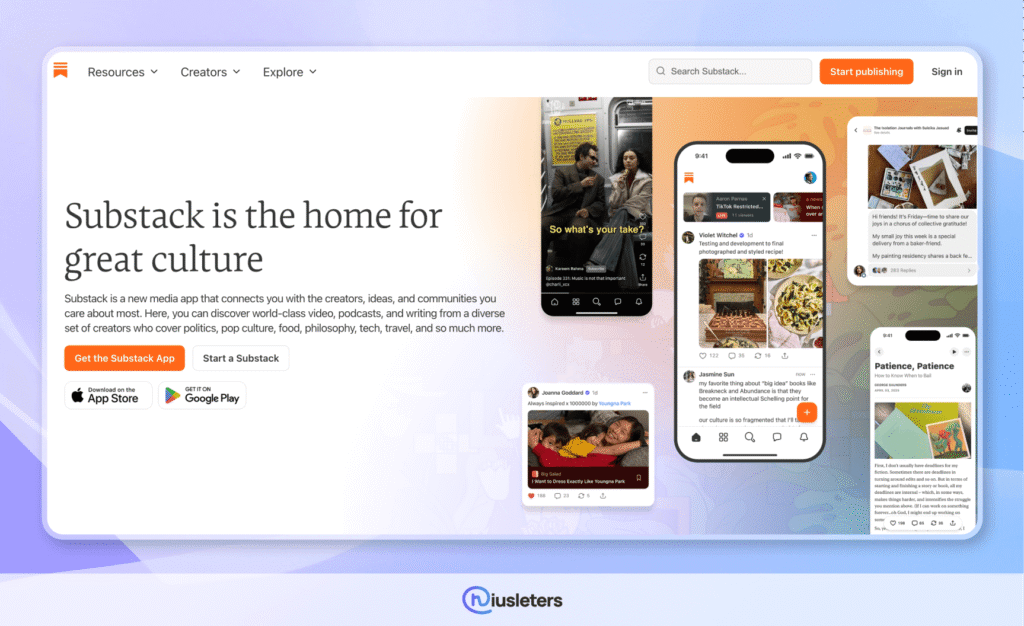
Substack operates with a different logic. And it’s not by accident: it wasn’t built for rapid-growth newsletters, but for creators who want to build a loyal audience based on their voice, their style, and their relationship with readers.
The pricing model is simple: the platform is free as long as you don’t charge. If you decide to enable paid subscriptions, Substack takes 10% of revenue. This model has led many writers, independent journalists, and analysts to find a space where their work can sustain itself without relying on advertising or external algorithms.
In terms of automations, it’s the most basic option. There are no advanced workflows, and while they’ve added features like scheduling, exclusive posts, and integration with Notes and Chat, it remains a platform where the priority is writing, not automating.
Substack’s analytics are adequate for a creator who publishes regularly and wants to understand how many opens they’re getting, what percentage of readers pay, and how the community is evolving. It’s not as granular as Beehiiv, but it doesn’t try to be. The value proposition lies more in stability and its social network.
In design, Substack maintains a minimalist approach. The goal is for reading to be pleasant, without add-ons or distractions. For many creators that’s an advantage, but for those who need more precise visual control, it can fall short.
The social network is its greatest strength. Substack has turned its ecosystem into a place where readers don’t just receive emails — they participate in conversations, comments, and private posts. That sense of belonging is hard to replicate on other platforms.
Monetization is straightforward: monthly or annual subscription. It’s a clear, transparent model that’s easy to manage. And while it takes time to work, when it does, it can become a stable income stream. However, if you prefer to monetize through sponsorships rather than relying solely on paid subscribers, platforms like Niusleters let you connect directly with brands interested in your audience.
Substack is especially well-suited for creators with a strong voice — analysts, journalists, writers, educators — who are looking for a more intimate space that’s less focused on aggressive metrics.
MailerLite: The Practical Choice for Creators With a Broader Project
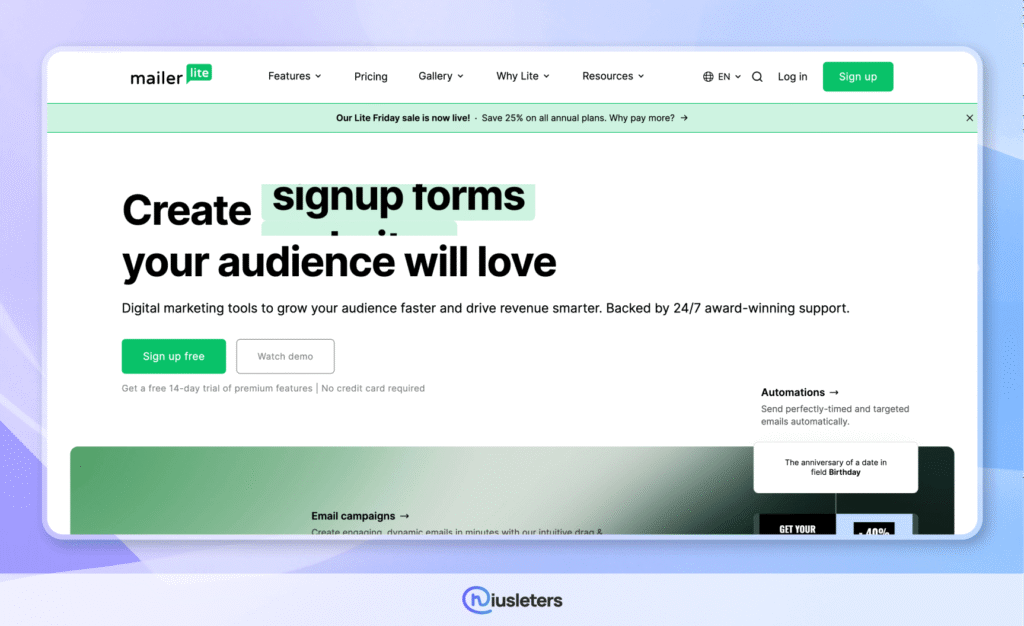
MailerLite occupies a different spot. It doesn’t focus solely on newsletters, but on everything around them: landing pages, advanced automations, forms, segmentation, and a polished visual experience. It’s a platform that works for individual creators as well as small brands or projects with broader needs than simply sending a newsletter.
In terms of pricing, it tends to be the most competitive when you need more complete automations. Its free plan has send limits, but its Growing Business or Advanced plan offers more tools at a lower cost than Beehiiv or equivalent solutions.
Automations are well above Substack’s and, in some cases, even above Beehiiv’s. MailerLite lets you create complex workflows, integrate forms, manage different lists, and execute segmented campaigns with considerable control.
In analytics, it provides what you need: open rates, clicks, activity maps, user behavior, and flow analysis. It’s not as thorough as Beehiiv in acquisition metrics, but it’s more complete in automations.
Design is probably its biggest advantage. MailerLite has spent years being a visual tool, with a clean editor, customizable blocks, and well-crafted landing pages. For creators who want to offer more than just an email — a dedicated space, a simple website, a portfolio, a more complete archive — it’s a solid option.
In terms of monetization, it doesn’t have a built-in system like Substack, but it allows you to set up funnels, sales campaigns, and custom automations. It’s more flexible, but requires more work. For those looking for sponsorships as a revenue source, Niusleters can complement MailerLite by connecting you with brands seeking segmented audiences.
MailerLite is the ideal choice for anyone who wants to integrate their newsletter into a bigger project: a digital business, a website, a lead generation system, or more visual content.
Which Type of Creator Is Each Platform Best For?
There’s no universal winner here. Each platform is built for a different type of creator with different needs.
If you’re looking for growth tools and a more professional approach, Beehiiv is the better fit. It’s the platform designed for niche newsletters that want to scale quickly and analyze every detail of their progress.
If your priority is a direct relationship with readers, voice, and a sense of community, Substack is hard to match. Its subscription model and minimalist approach work especially well for writers, analysts, and journalists.
If you have a more complete project — a website, digital products, funnels, automations — MailerLite is usually the most practical option. It’s not trying to be “the trendy platform” — it’s a tool that solves real day-to-day problems.
And if you already know you want to monetize your newsletter through sponsorships, without relying exclusively on paid subscribers, Niusleters lets you register your newsletter for free and connect directly with brands looking for audiences like yours. No hidden middlemen, with full transparency and control over every collaboration.